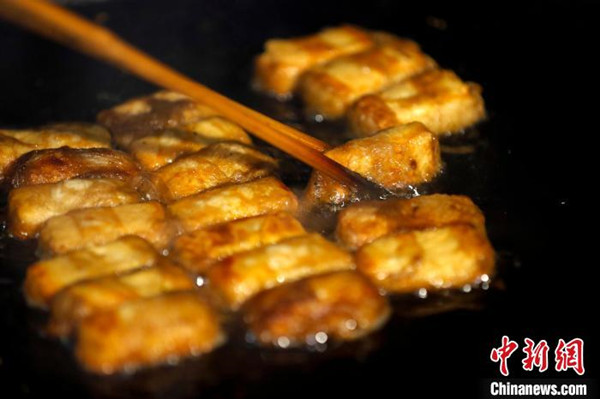
Hairy Tofu
Introduction
Hairy Tofu, known as "Mao Doufu" in Chinese, is a distinctive culinary specialty hailing from the Huizhou district of Huangshan city, located in East China's Anhui province. This unique dish stands out due to its appearance, which features a coating of white mold that resembles hair, giving rise to its unusual name. The mold forms naturally on the surface of the tofu during the fermentation process, influenced by the region's specific geographic and climatic conditions. Hairy tofu is celebrated for its bold and complex flavors, which are the result of traditional fermentation practices deeply rooted in local culture. It is a popular delicacy appreciated by both locals and visitors for its rich taste and cultural heritage.
History
The history of hairy tofu dates back several centuries, firmly embedded within the culinary traditions of Anhui province. This unique form of tofu reflects the innovative methods developed to preserve food in a time before refrigeration. The fermentation process not only enhanced the shelf life of tofu but also imparted a distinctive flavor profile that has been cherished through generations. Over the years, hairy tofu has evolved from a humble preservation method to a celebrated culinary delight, recognized for its historical significance and unique taste.
Preparation
Ingredients
The primary ingredient for making hairy tofu is high-quality soybeans. These soybeans are meticulously selected to ensure the tofu's rich texture and depth of flavor. Additional ingredients include water and a natural fermenting agent that facilitates the growth of the characteristic white mold on the tofu's surface. The fermentation process is critical, as it transforms the tofu into its hairy variant, allowing it to develop its unique flavor profile.
Cooking Method
The preparation of hairy tofu involves several traditional processes that require precision and care. Initially, soybeans are thoroughly sifted and cleaned to remove any impurities. They are then soaked in water to soften, which facilitates the subsequent refining stage where the soybeans are ground into a smooth paste. This paste is filtered to extract soy milk, which is then coagulated to form tofu. The tofu is pressed to remove excess water, diced into uniform cubes, and left to ferment in a controlled environment. During fermentation, the tofu is meticulously monitored to ensure the development of the white mold, which imparts the dish's unique texture and flavor. Once the fermentation reaches the desired stage, the tofu is ready to be cooked. It can be pan-fried, steamed, or incorporated into various dishes, where it adds a distinctive depth of flavor and an intriguing texture.
Cultural Significance
Hairy tofu holds a significant place in the cultural landscape of Anhui province. Its method of production and unique appearance symbolize the region's ingenuity in food preservation and culinary adaptation. The dish is more than just a food item; it represents the resilience and creativity of the local people. It is often featured in cultural festivals and local celebrations, showcasing the culinary heritage of the region. Hairy tofu is also a testament to the importance of fermentation in Chinese cuisine, which is known for its variety of fermented foods. Through its distinctive flavor and appearance, hairy tofu continues to attract culinary enthusiasts and cultural historians alike, eager to explore its role in the broader tapestry of Chinese culinary traditions.
Varieties
While the classic version of hairy tofu is most prevalent, variations exist that highlight regional preferences and innovative culinary approaches. In some areas, additional spices and ingredients might be introduced during the fermentation process to enhance the tofu's flavor. These variations reflect local tastes and the availability of ingredients, adding to the diversity of this traditional dish. Moreover, modern chefs might experiment with different cooking techniques and pairings, bringing contemporary twists to this age-old delicacy. Despite these variations, hairy tofu's fundamental characteristics—a rich, savory flavor and unique texture—remain consistent, paying homage to its storied past while embracing culinary evolution.
Popularity and Influence
The popularity of hairy tofu extends beyond its regional origins, capturing the interest of a broader audience. Its unique appearance and rich flavor profile have made it a subject of culinary curiosity and appreciation. As food enthusiasts seek out traditional and artisanal food products, hairy tofu has found its place on the menus of restaurants that specialize in authentic Chinese cuisine. Its influence is evident in the way it inspires chefs to explore fermentation techniques and incorporate them into modern culinary creations. Moreover, the dish's popularity highlights a growing interest in regional Chinese cuisines, encouraging a deeper understanding and appreciation of the diverse flavors and culinary practices that define them.








